

Dry-labbing
There, I said it. Out loud. Now, I'm off to use mouthwash...

There is a term of art in the forensic sciences (and in scientific research generally) for one of the most brazen forms of fraud a scientist can commit. It is called dry labbing,1 and the name is almost admirably honest about what it describes: a laboratory analysis that is, in the relevant sense, dry.2 No samples are run, no reagents are consumed, and no instruments used. Just a result, conjured from thin air and dressed in the professional costume of a certificate of analysis.
The colloquial definition, from the Urban Dictionary of all places, is about as unambiguous as definitions get: “to make up data in a scientific experiment, as opposed to observe or experiment in order to obtain it.” Usually done, the entry helpfully adds, “in response to pressures to finish the experiment by unethical researchers.” Bless the internet. In a recent article I wrote in Science & Justice, I defined dry labbing formally as a type of fraud in a schema of fraud taxonomy. I think it will help the forensic community in talking about and preventing dry labbing.

How it works—and it really is this simple
In the dietary supplement world, where dry labbing has gotten significant attention after a Dateline NBC exposé a few years back, the mechanics are almost laughably straightforward. A manufacturer sends a sample to a contract lab along with a submission form. That form often includes, in a gesture of helpful transparency, the expected results. Thanks! The lab (if you want to call it that) then produces a certificate of analysis that closely mirrors what the manufacturer told them to find. Amazing! The sample may sit in a refrigerator, untouched. Or it may get a cursory once-over with a generic method that generates noise rather than signal. The report, however, looks just fine. Wow!
Chris Hansen and a Dateline crew infiltrated one such operation, Atlas Bioscience in Tucson, AZ. They handed over samples deliberately contaminated with arsenic, lead, sibutramine, and selenium dioxide; any competent analytical lab should have caught these matericals. The also provided a fabricated certificate of analysis listing the “expected” clean results. The results came back nearly identical to the certificate they’d handed in. Shockingly, no adulterants were detected. You don’t say!
The forensic science parallel is direct and uncomfortable. Annie Dookhan, the Massachusetts drug lab chemist whose misconduct eventually led to the dismissal of tens of thousands of drug convictions, admitted to dry labbing (visually identifying drug samples without actually testing them) for as long as three years. She was testing over 500 samples per month, roughly five times the normal rate, and her supervisors had apparently never noticed (or cared) that she was rarely in front of a microscope. Her productivity remained steady even after a Supreme Court ruling required chemists to appear and testify in person. She got faster, not slower. That should have been a flashing red light visible from low Earth orbit. It was not.
Fabrication vs. falsification: a distinction that matters less than you’d think
The research misconduct literature draws a careful line between fabrication, making up data for experiments that never happened (dry labbing in its purest form), and falsification, which is manipulating results from work that actually took place. Both are intentional and both are defined as misconduct precisely because they are not honest error or a difference of professional opinion. The distinction is a useful one for academic purposes. For the person who went to prison because their drug sample was “tested,” the distinction is cold comfort.
What is more interesting, and far more troubling, is the prevalence data. A meta-analysis of anonymous surveys found that about 2% of scientists admitted to having fabricated, falsified, or modified data at least once. That same study found that researchers were considerably less shy about describing their colleagues’ behavior: 14% of respondents reported witnessing such conduct in peers. Given that people tend toward charity when judging themselves and toward skepticism when judging others, the true figure likely sits somewhere between those two numbers. Up to a third of survey respondents admitted to subtler “questionable research practices,” like selectively reporting data, dropping inconvenient observations, suppressing contradictory results. You know—the “ususal.”
Two percent sounds reassuringly small until you contemplate the volume of scientific work being done at any given moment, and the compounding effect of false results that enter the literature and stay there. A 1999 study found that retracted articles were cited 2,034 times after retraction; less than 10% of those citations acknowledged the retraction. Falsified science doesn’t die when it’s exposed; it haunts the literature like a ghost that hasn’t realized the house changed hands.
The system problem that looks like a people problem
Here is where I will remind you that systems fail, not the people work within them.3 Dry labbing does not emerge from nowhere, like its results do. It emerges from a set of conditions that the organizational structure either creates, permits, or fails to prevent. Or, sweet mother-of-pearl, all three.
In Dookhan’s case, a lab that rewarded throughput, supervisors who never questioned anomalously high productivity, and an environment where the social cost of raising a concern apparently exceeded the professional cost of staying quiet made her dry labbing possible. In the dietary supplement industry, it was manufacturers who shop for labs by price and lead time, submission forms that telegraph expected results to the people doing the testing, and a regulatory apparatus that, until recently, inspected paperwork rather than the physical laboratory. One of the consultants who worked with Dateline on their exposé made a pointed observation: a lab facility that lacks visible analytical equipment might not be up to the task. You think? This is an almost comically low bar. And yet…
The solution that gets proposed most often is auditing. Send the lab a blind sample, a dummy sample, a known-contaminated sample, and see what comes back. Compare the results against a second laboratory. Conduct site visits. Ask to see instrument logs, SOPs, calibration records, and the sample holding room. All of this is reasonable. All of it is also reactive as it catches dry labbing after the fact, or at best during a spot-check, rather than building a system that makes dry labbing structurally difficult in the first place. You know, preventative.
The more durable fix is what the research misconduct literature calls a “scientific mindset,” one that treats skepticism as a feature rather than an insult, that builds in redundancy not as a punishment for suspected bad actors but as a standard operating assumption about the fallibility of human judgment. How about that? Building a system that prevents the next failure. What a novel idea!
What it costs
The president of the Council for Responsible Nutrition, pushed back on the Dateline story by noting that over 150 million Americans use dietary supplements annually and there is little evidence of widespread adulteration. He is probably right that the worst abuses are not universal; he may be less right that “little evidence” means “not widespread,” given that the evidence depends heavily on whether the labs doing the testing are actually, you know, testing.
In the criminal justice context, the math is starker. The average cost of a wrongful conviction in the U.S. has been estimated at $6.1 million, not counting the incalculable costs to the wrongly convicted person. Since 2019, compensation paid out for wrongful convictions has exceeded $4 billion. That is an enormous amount of money being spent to remedy harms that a functioning system would not have produced. Moreover, it does not make those systems more rigorous, because the accountability lands on the wrong institution, or on no institution at all.4
The perverse incentive structure is familiar by now, but it bears repeating: jurisdictions will write large checks to settle wrongful conviction claims while refusing to fund forensic laboratory improvements that would reduce the incidence of wrongful convictions.5 Training is blamed when the system is the problem. Individuals are fired when the procedures are the problem.6 And a new crop of individuals steps into the same broken system and faces the same pressures that shaped the behavior of the people before them.7
Dry labbing is really a feedback problem
If the results of your test are never going to be seriously questioned, that is, if the person sending you the sample has already told you what to find, if the consumers of your results don’t have the expertise to evaluate them, if your throughput numbers are being tracked but your methods are not, then the gap between testing and not testing becomes very small. The cost of doing the work stays constant; the benefit of skipping it rises with every unchallenged report.
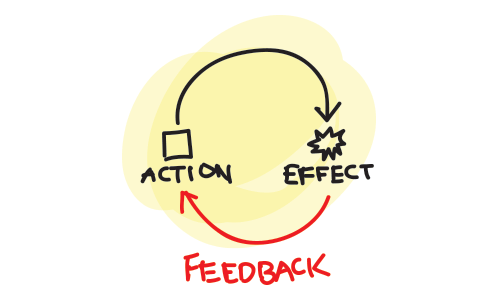
Every system needs feedback to correct itself. The criminal justice system’s treatment of wrongful convictions as isolated individual failures rather than signals about systemic function is one version of this problem. The supplement industry’s tendency to shop for labs by price and turnaround time, rather than by demonstrated analytical rigor, is another. In both cases, the feedback that would correct the system, like a challenged result, a blind sample that fails, or a conviction that gets vacated, is systematically discouraged, ignored, or arrived at too late to matter much.
The fix is not simply more rules,8 more inspections,9 more auditing,10 or better training for people who are already operating in a structure that rewards the wrong things.11 The fix is designing systems where the cost of doing the work honestly is lower than the cost of not doing it. What would this look like? Well, anomalously high throughput would raise an automatic flag rather than a round of applause. The expected result wouldn’t be provided to the lab doing the testing. And errors would be treated as system signals rather than individual moral failures.
This is achievable. It has been achieved, in medicine and aviation and nuclear power, in organizations that decided the cost of failure was too high to leave the feedback loop broken.
Forensic science* is not there yet. Not by a long shot. Neither is the supplement industry. Neither, honestly, is most of the testing-and-certification enterprise that underpins a significant amount of what we eat, take, and trust.12
Good luck.
“Dry labbing” has a second, legitimate meaning. It’s a computational workspace. In the life sciences, physics, and computer science, a “dry lab” is a designated workspace for applied computational, mathematical, and theoretical research. Instead of interacting with hazardous chemicals or physical biological samples in a wet lab, scientists and bioinformaticians use computer clusters, AI, and software. It allows researchers to simulate complex phenomena, like drug interactions or molecular changes, at a fraction of the cost, and enables early-stage exploratory research without the risks or resource investments of a physical laboratory. As my dad used to say, “You can learn something new every day if you’re in the right place.” You’re welcome.
As opposed to “wet chemistry,” a pun of sorts to call it “dry.” Ha. Ha.
Because I apparently never tire of reminding anyone who will listen.
Part of the issue is that there’s no direct feedback to the source of the wrongful conviction. Wrongful conviction compensation is typically paid by taxpayers through federal, state, or local government funds. Wrongful conviction compensation is typically paid by taxpayers through federal, state, or local government funds. nder federal law (the Innocence Protection Act), the federal government pays up to $50,000 per year of imprisonment (and up to $100,000 for death row) out of federal funds for federal convictions. If an exoneree wins a civil rights lawsuit (such as a Section 1983 claim) proving police or prosecutorial misconduct, payouts are often covered by city or county risk-management pools, local municipal budgets, or police department liability insurance, which are also funded by local taxpayers. That is, the money doesn’t come out of the budget of the agency or entity responsible. No penalty, no feedback, no system. It’s not that hard:
For example, $1 billion over five years was spent on an initiative for forensic DNA via the President’s DNA Initiative, titled Advancing Justice Through DNA Technology, launched by the Bush administration in 2003. It aimed to process backlogged evidence, expand the FBI’s CODIS database, and train personnel.
Blaming the employee instead of fixing root problems creates a toxic “blame culture” that ruins trust, lowers output, and hides systemic flaws. Finger-pointing masks broken processes, poor training, or unclear rules. Fear of punishment stops workers from reporting hazards or sharing new ideas (Deming’s Rule 8: Drive out fear). Teams become guarded, defensive, and focused on self-protection rather than teamwork.
Old management fable: Five monkeys are put in a cage with a ladder leading to a bunch of bananas. When any monkey climbs the ladder, scientists spray all of them with ice-cold water. The monkeys learn that climbing triggers a painful, freezing soak for everyone. Soon, if a monkey tries for the bananas, the others physically pull him down and beat him up. Scientists remove one monkey and replace it with a new one. The newcomer immediately tries to climb the ladder, and the other four attack him—even though he hasn’t been sprayed yet. One by one, all original monkeys are replaced with fresh ones who have never experienced the cold water. Yet, no monkey ever climbs the ladder, and any new arrival who tries is violently stopped by peers who don’t even know why.
I think about this story a lot.
Please, oh, please, no. More rules fail to help because they cause cognitive overload, destroy personal autonomy, and shift focus from good outcomes to mere compliance. When systems add too many policies, people tune them out, find workarounds, or feel micromanaged.
Perversely, more inspections lower quality. No, really: “Inspection does not improve the quality, nor guarantee quality. Inspection is too late. The quality, good or bad, is already in the product. As Harold F. Dodge said, “You can not inspect quality into a product.” (Deming, Out of the Crisis, page 29).
Performing more audits can lower quality due to inspection fatigue (“Another one?!?”), resource dilution (prepping and reviewing), and a false illusion of coverage (“We’re good; we just got audited last month,” aka whistling past the graveyard).
See footnotes 5 through 7. More training in a dysfunctional system only reinforces or adds on to the bad stuff that’s already there. You’re stacking turtles with bandaids on broken turtles on non-functioning turtles all the way down.
Do I need to mention cyclospora, E. coli, Clostridium botulinum, listeria, and salmonella? Don’t make me link to all those, it’s too damn depressing.